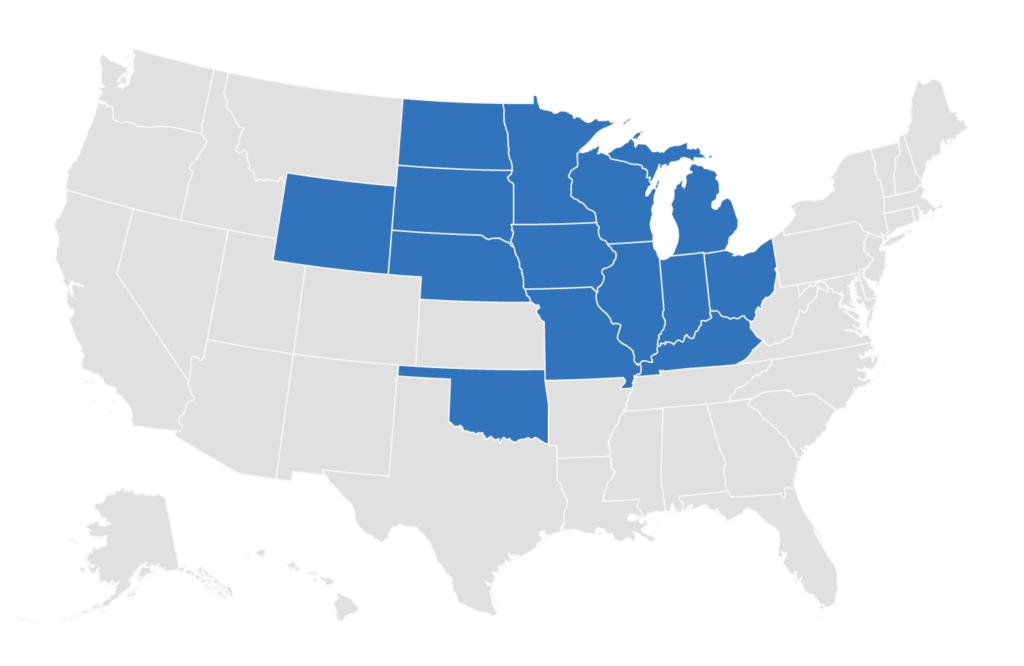
Data Centers in Iowa
This website is provided for educational purposes and does not represent legal advice. State and federal data center regulations are changing fast, and so are data center technologies and industry practices. While we try to keep this website up to date, we cannot guarantee the information is always 100% current. Please verify the information with your local government, when in doubt.
Frequently Asked Questions
Won't data centers raise my electric bill?
Every rate charged by an investor-owned utility in Iowa must be approved by the Iowa Utilities Commission in a public rate case. Utilities are not permitted to shift costs between customer groups — the IUC dockets are public.
What about our water?
High-volume water use requires a permit — no exceptions for data centers. Anyone using more than 25,000 gallons per day needs a water use permit from the Iowa DNR, which manages aquifer sustainability statewide and can condition or deny permits to protect existing users.
Are data centers getting a free ride on taxes?
Iowa’s data center exemption applies only to facilities meeting statutory investment thresholds, and it covers computer and cooling equipment purchases. Data center projects still generate substantial local property tax value, and host communities frequently negotiate additional direct payments and infrastructure contributions as part of development agreements.
What about noise?
Noise is regulated at the local level — through city and county ordinances and, for projects on unincorporated land, through the conditional-use permit conditions your county board of supervisors imposes.
What does my community actually get?
Construction jobs during multi-year build-outs, permanent skilled operations jobs, expanded local tax base, and utility infrastructure investment that strengthens reliability for the whole area.
Who decides where these get built?
Your city and county. Zoning, setbacks, screening, road agreements, and construction conditions are all local decisions made in public meetings and addressed in local laws.