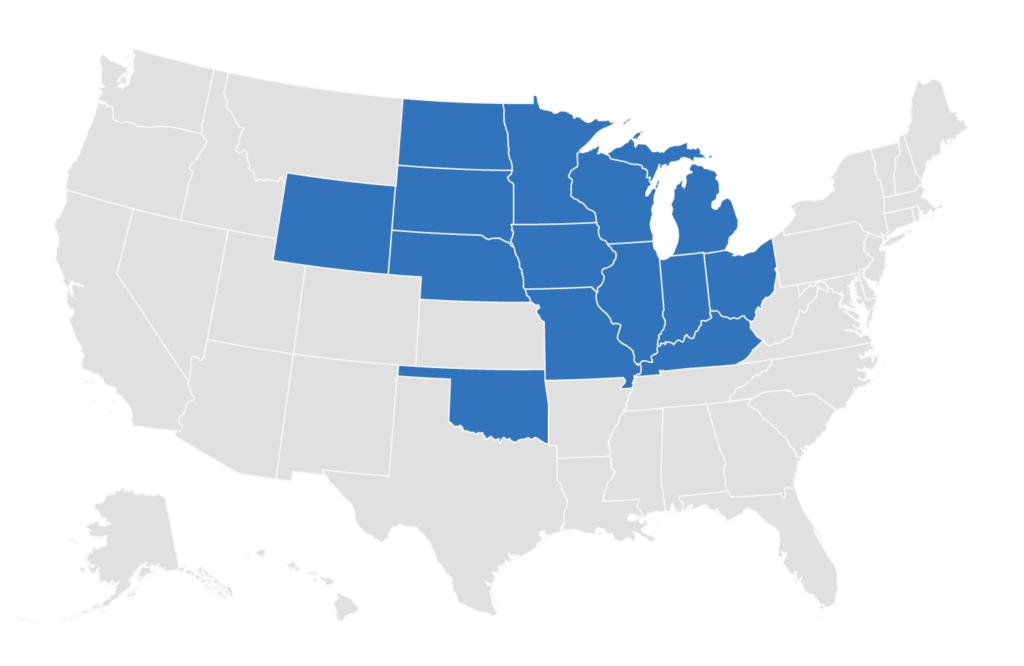
Data Centers in Kentucky
This website is provided for educational purposes and does not represent legal advice. State and federal data center regulations are changing fast, and so are data center technologies and industry practices. While we try to keep this website up to date, we cannot guarantee the information is always 100% current. Please verify the information with your local government, when in doubt.
Frequently Asked Questions
Won't data centers raise my electric bill?
Kentucky utilities are regulated by the Kentucky Public Service Commission, which reviews utility rates, tariffs, certificates, and major infrastructure investments in public proceedings. Service arrangements for major new loads are handled through utility-approved rates and contracts, with costs reviewed through the same public utility framework that protects existing customers.
What about our water?
Significant water withdrawals in Kentucky require state review, and wastewater discharges are regulated through Kentucky’s environmental permitting programs. Data centers receive no special exemption from those rules. Like other major industrial users, a project must account for its water source, wastewater handling, and site-specific environmental permits before operating.
Are data centers getting a free ride on taxes?
Kentucky’s data center sales-and-use tax incentive is conditioned on very large capital investment. The 2025 expansion set minimum investment thresholds based on county population: at least $450 million in counties with 100,000 or more people, $100 million in mid-sized counties, and $25 million in smaller counties. The exemption applies to qualified data center equipment — and projects still generate local property value, construction activity, and long-term economic development.
What about noise?
Noise is generally regulated at the local level — through city and county ordinances, zoning approvals, setbacks, buffering, and site-specific permit conditions. For projects in unincorporated areas, those commitments are typically written into conditional-use permits or development agreements. Modern data centers commonly use acoustical studies, equipment screening, and property-line limits to make noise commitments enforceable locally.
Who decides where these get built?
Your city and county. Local governments retain planning and zoning authority over land use, site plans, setbacks, screening, road agreements, and development conditions. Those decisions are made locally and in public. Backup generators and environmental features remain subject to applicable state permitting requirements.
What does my community actually get?
Construction jobs during build-out, permanent skilled operations jobs, expanded local tax base, and infrastructure investment tied to the project.