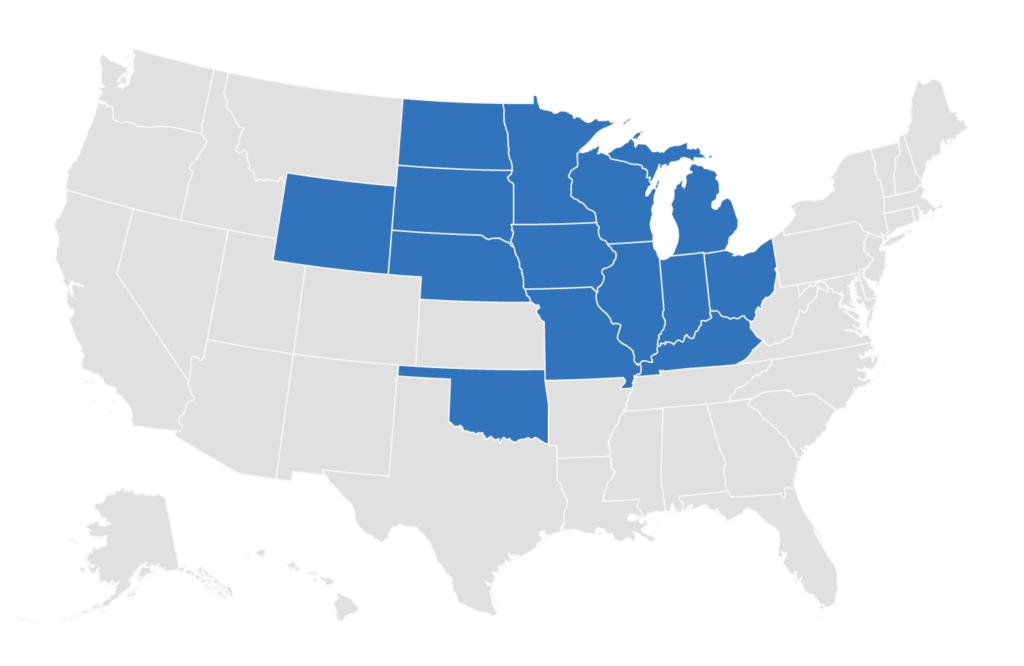
Data Centers in Nebraska
This website is provided for educational purposes and does not represent legal advice. State and federal data center regulations are changing fast, and so are data center technologies and industry practices. While we try to keep this website up to date, we cannot guarantee the information is always 100% current. Please verify the information with your local government, when in doubt.
Frequently Asked Questions
Won't data centers raise my electric bill?
In Nebraska, your utility works for you — literally. Every electric utility in the state is public power: public power districts, cooperatives, and municipal systems, governed by elected or publicly appointed boards that set rates in open meetings you can attend under the Public Records and Open Meetings Acts. Large customers are served under board-approved agreements structured to protect existing customers — typically requiring the big customer to fund the infrastructure built for it and commit to long-term payment obligations before construction starts.
Public power is also why Nebraska has some of the lowest electric rates in the nation — and why large customers locate here. Their revenue helps cover the fixed costs of a system owned by the people it serves.
What about our water?
Nebraska’s groundwater is governed locally — by the state’s 23 Natural Resources Districts, each with a locally elected board. Significant new groundwater uses are permitted and managed by the NRD where the project sits; surface water rights run through the Department of Natural Resources under the prior appropriation doctrine. Data centers get no exemption.
Are data centers getting a free ride on taxes?
Nebraska’s incentives are performance-based. Benefits run through the ImagiNE Nebraska Act, which requires certified investment and job creation to earn them.
What about noise?
Nebraska does not set a statewide industrial noise standard. Noise is regulated at the local level — several cities have full noise codes with dBA property-line limits, and rural county boards impose noise conditions on data center projects through the conditional-use permit process. These conditions can be verified by third-party acoustical studies, with that number becoming an enforceable condition of the local permit.
Who decides where these get built?
Your county and city control zoning, setbacks, screening, and construction conditions in public meetings. Backup generators require construction permits from the Nebraska Department of Environment and Energy. And because power supply decisions run through public boards, even the utility side of a project happens in the open.
What does my community actually get?
Construction employment, permanent skilled jobs, one of the largest property tax additions a community can receive, and — uniquely in Nebraska — large-customer revenue flowing into utilities the public owns, supporting the rates and reliability of the whole system.