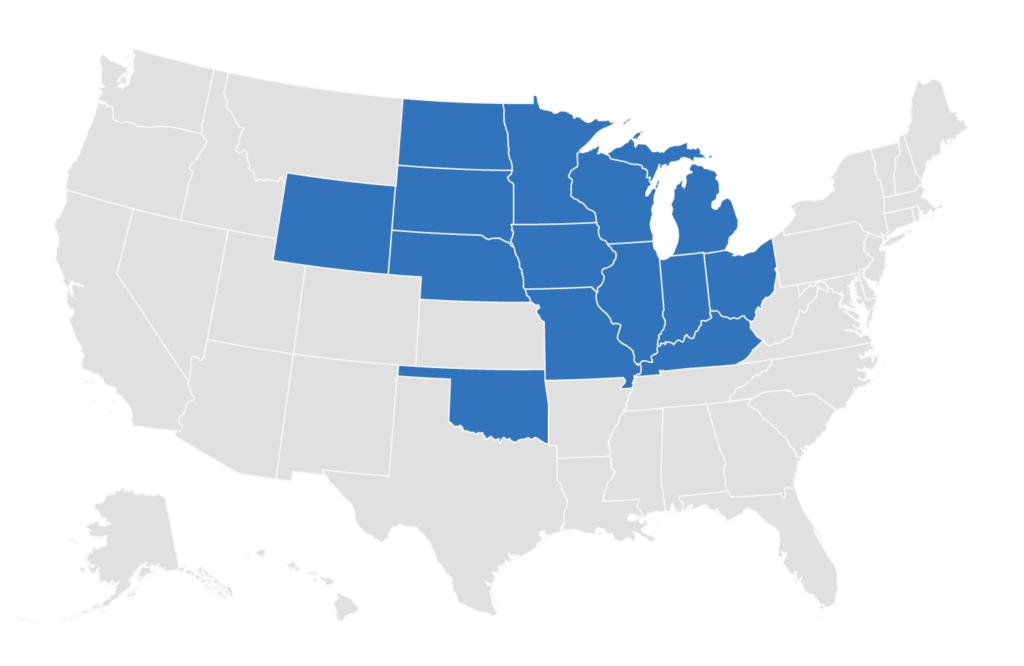
Data Centers in Wyoming
This website is provided for educational purposes and does not represent legal advice. State and federal data center regulations are changing fast, and so are data center technologies and industry practices. While we try to keep this website up to date, we cannot guarantee the information is always 100% current. Please verify the information with your local government, when in doubt.
Frequently Asked Questions
Won't data centers raise my electric bill?
The Wyoming Public Service Commission approves utility rates and large-customer contracts in public proceedings. Wyoming utilities pioneered specialized large-power and interruptible service structures years before the current data center boom — frameworks under which large flexible loads pay negotiated, commission-reviewed rates and can curtail during peak stress, supporting grid stability rather than straining it.
What does my community actually get? (This is where Wyoming stands out.)
Wyoming’s Industrial Siting Act requires very large industrial projects to obtain a permit from the Industrial Siting Council, housed within the Department of Environmental Quality. The process assesses local impacts on roads, services, housing, and schools — and directs impact-assistance payments to the affected counties and municipalities. Host communities receive resources, by statute, before and during construction. On top of that: sales and property tax revenue, multi-year construction employment, and permanent skilled operations jobs.
What about our water?
All water use in Wyoming is permitted through the State Engineer’s Office under prior appropriation — existing rights come first, by law. Data centers receive no exemption.
Are data centers getting a free ride on taxes?
Wyoming’s data center sales tax exemption requires minimum investment thresholds to qualify and applies to equipment purchases. Projects remain subject to property taxation and, where they cross the threshold, to the siting-law impact payments described above.
What about noise?
Wyoming does not set a statewide industrial noise standard, but the Industrial Siting Council’s review considers project impacts — including noise assessment — as part of the siting-permit process for major projects. On top of that, many cities have their own noise ordinances, and for projects on unincorporated county land, noise conditions are written into the conditional-use permit. These conditions can be verified by third-party acoustical studies, with that commitment becoming an enforceable condition of the siting or local permit.
Who decides where these get built?
Your county and municipality control zoning and local conditions — and for the largest projects, the state’s Industrial Siting Council adds a second, public layer of review with hearings where residents participate directly. Backup generators require air permits from the Wyoming Department of Environmental Quality.